
Understanding Your Rice Purity Score: What Each Range Means
Just finished taking the Rice Purity Test and wondering what your score actually means? You’re not alone. Every day, thousands of people search for explanations of their Rice Purity scores, seeking to understand where they stand and what their number reveals about their life experiences.
This comprehensive guide breaks down every Rice Purity score range, explains what each means, and helps you understand your results without judgment. Whether you scored 15 or 95, we’ll help you interpret your results and understand what they say about your unique journey.
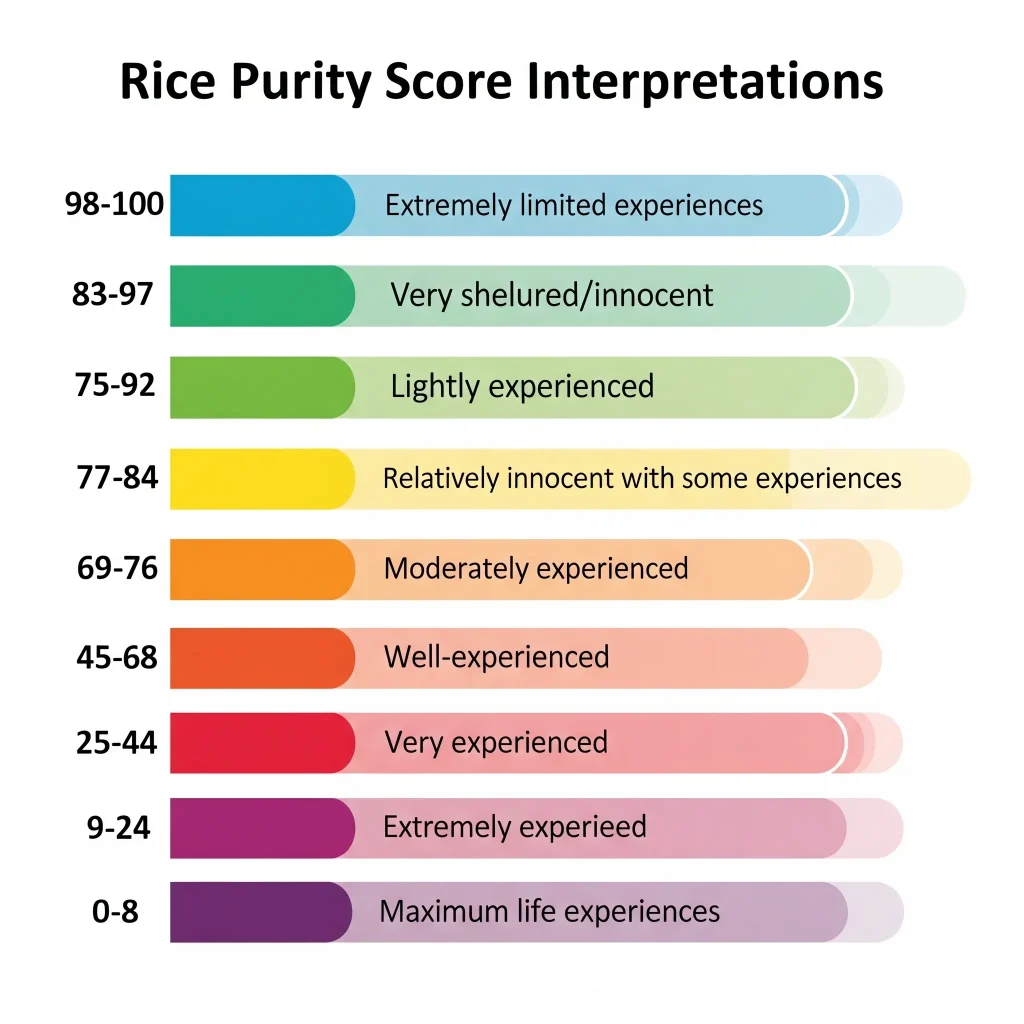
Quick Score Reference Guide
Before we dive deep, here’s a quick overview of Rice Purity Test score ranges:
Remember: Every score is completely normal and valid. Your number simply reflects your unique life experiences – not your worth as a person.
What Rice Purity Scores Actually Measure
Before interpreting your specific score, it’s crucial to understand what the Rice Purity Test actually measures. The test evaluates life experiences across various categories, not moral character or personal worth.
Categories Covered in the Test:
Your score reflects the breadth of experiences you’ve had, with 100 indicating very few experiences from the test’s categories and 0 indicating you’ve experienced everything on the list.
Detailed Score Range Explanations
Score Range 98-100: The Sheltered Path
What This Score Means: If you scored between 98-100, you’ve had very limited experiences from the categories tested. This typically indicates a more sheltered or protected upbringing, strong personal boundaries, or simply different life circumstances that haven’t exposed you to many of the test’s scenarios.
Common Characteristics of This Range:
What This Score Does NOT Mean:
Real Talk: Scoring in this range is completely normal, especially for younger test-takers, those from protective family environments, or individuals who’ve made conscious choices about their experiences. Many successful, happy people maintain higher purity scores throughout their lives by choice.
Moving Forward: If you’re comfortable with your experiences and choices, there’s absolutely no need to change anything. If you feel limited by circumstances rather than choice, consider gradually expanding your comfort zone in areas that align with your values.
Score Range 93-97: Innocently Exploring
What This Score Means: This range indicates you’ve begun exploring life beyond very sheltered experiences but remain relatively innocent compared to your peers. You’ve likely dipped your toes into some new experiences while maintaining strong personal boundaries.
Typical Experiences in This Range:
Life Context: People in this range often include high school upperclassmen, college freshmen, or individuals from moderately conservative backgrounds who are beginning to explore independence while maintaining core values.
Growth Opportunities: This is often a period of healthy exploration and boundary-testing. Focus on making choices that align with your evolving values rather than peer pressure.
Score Range 85-92: Balanced Experiences
What This Score Means: You’ve had a moderate range of life experiences while still maintaining some innocence in various areas. This range often represents a balanced approach to life exploration – engaging with new experiences while exercising some caution.
Common Life Experiences:
Psychological Profile: This range often indicates someone who’s socially active, willing to take calculated risks, and learning through direct experience. You’re likely balancing personal growth with practical considerations.
Peer Comparison: This is one of the most common score ranges among college students, representing the typical “college experience” balance of academics, social life, and personal exploration.
Score Range 77-84: Actively Exploring
What This Score Means: You’ve actively engaged with a wide variety of life experiences and are comfortable exploring different aspects of adult life. This range suggests openness to new experiences combined with enough wisdom to avoid extreme situations.
Characteristic Experiences:
Life Stage Indicators: This range is common among upperclassmen, young professionals, or individuals who’ve had opportunities for diverse experiences through travel, relationships, or social exposure.
Personal Development: You’re likely developing strong self-awareness about your preferences, boundaries, and values through direct experience rather than theory.
Score Range 69-76: Moderately Experienced
What This Score Means: You’ve accumulated substantial life experiences across multiple categories. This range indicates someone who’s lived actively, made various choices (both good and questionable), and learned from direct experience.
Typical Life Experiences:
Maturity Indicators: People in this range often demonstrate emotional maturity gained through experience. You’ve likely learned to balance fun with responsibility and understand your personal limits through trial and error.
Social Context: This is a common range for college graduates, young professionals, or individuals who’ve had rich social lives during their formative years.
Score Range 45-68: Well-Experienced
What This Score Means: You’ve had extensive experiences across most categories tested. This range indicates someone who’s lived fully, explored widely, and accumulated substantial life experience through active engagement with the world.
Experience Breadth:
Personal Growth: This range often represents someone who’s learned important life lessons through direct experience, developed strong personal boundaries through trial and error, and gained wisdom about what works for them personally.
Life Philosophy: You likely have a “try everything once” approach to life, balanced with practical wisdom about consequences and personal limits.
Score Range 25-44: Very Experienced
What This Score Means: You’ve experienced most categories extensively and have lived a particularly rich, varied life. This range indicates someone who’s actively sought out diverse experiences and hasn’t shied away from challenging or complex situations.
Life Characteristics:
Wisdom Development: People in this range often possess practical wisdom about human nature, relationships, and life’s complexities. You’ve likely developed strong problem-solving skills and emotional resilience through varied experiences.
Social Perspective: You probably have a broad, accepting view of human behavior and strong empathy for others’ choices and circumstances.
Score Range 9-24: Extremely Experienced
What This Score Means: You’ve had extensive experiences across virtually all categories tested. This range indicates someone who’s lived life to the fullest, explored widely, and accumulated vast experience across many domains.
Experience Depth:
Life Wisdom: This range often represents someone with deep understanding of human nature, strong emotional intelligence developed through experience, and practical wisdom about life’s complexities.
Personal Philosophy: You likely believe in living authentically and fully, learning through experience rather than theory, and maintaining openness to new possibilities.
Score Range 0-8: Maximum Experiences
What This Score Means: You’ve experienced virtually everything on the Rice Purity Test. This range is relatively rare and indicates someone who’s had an exceptionally full range of life experiences.
Unique Characteristics:
Personal Strength: People in this range often possess exceptional emotional intelligence, practical problem-solving skills, and broad perspective on human experience.
Factors That Influence Your Rice Purity Score
Understanding what affects Rice Purity scores helps put your results in proper context:
Age and Life Stage
Cultural and Social Background
Personality Factors
Opportunity and Circumstance
Common Questions About Rice Purity Scores
“Is my score normal for my age?”
Age-based score expectations:
Remember, these are rough guidelines – individual variation is huge and all scores are valid regardless of age.
“Should I be concerned about my score?”
When NOT to worry about your score:
When to reflect more deeply:
“How do I compare to others?”
Average scores by demographic:
Remember: Comparison can be interesting but shouldn’t drive your choices. Your unique life path is valid regardless of how it compares to others.
“Will my score keep changing?”
Score evolution patterns:
Factors that typically lower scores over time:
Making Sense of Your Score: A Healthy Perspective
What Your Score Says About You
Your Rice Purity score reflects:
Your score does NOT define:
Using Your Score for Self-Reflection
Healthy reflection questions:
Avoid these unhealthy thought patterns:
Moving Forward with Confidence
Regardless of your score, focus on:
Remember that personal growth involves:
Special Considerations for Different Score Ranges
For Higher Scores (80+): Embrace Your Path
If you scored higher, you might feel pressure to “catch up” or worry you’re missing out. Consider these perspectives:
Your higher score might reflect:
Moving forward:
For Lower Scores (50 and below): Own Your Journey
If you scored lower, you might face judgment or feel like you need to defend your choices. Remember:
Your lower score likely reflects:
Moving forward:
For Middle Scores (50-80): You’re in Good Company
Most people fall in this range, which typically indicates:
Balanced life approach:
Your advantage:
Conclusion: Your Score Is Just One Part of Your Story
Your Rice Purity score provides an interesting snapshot of your life experiences at this moment in time, but it’s just one small piece of your complex, unique story. Whether you scored 15 or 95, what matters most is that you’re living authentically according to your values and continuing to grow as a person.
Key takeaways for every score:
The most important relationship you’ll ever have is with yourself. Use your Rice Purity score as a tool for self-reflection if it’s helpful, but never let it become a source of judgment or limitation. Your story is still being written, and every new day brings opportunities for growth, learning, and authentic living.
Ready to understand your score even better? Take our Rice Purity Test now and discover what your unique experiences reveal about your journey through life. Remember – there are no wrong answers, only honest reflections of your personal path.
Disclaimer: The Rice Purity Test is for entertainment and self-reflection purposes only. Scores should not be used to make judgments about yourself or others, and this content is not intended as professional psychological or counseling advice.

